Fundamentals of Crop Physiology: An Introduction to Plant Growth and Water Relations
By Dr. Mubeen
22 Jul, 2026
Fundamentals of Crop Physiology
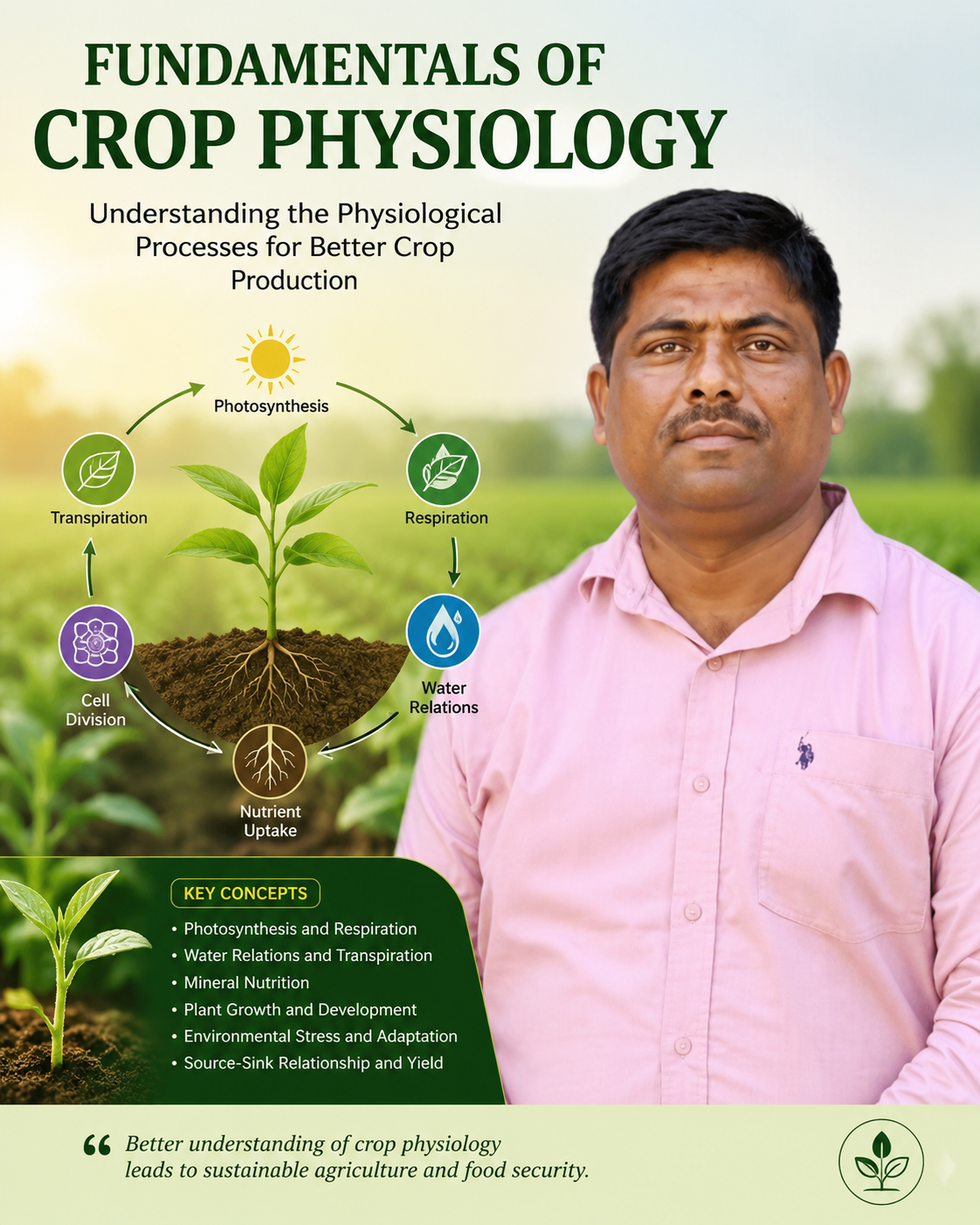
Crop physiology is the study of the functional processes of crop plants at the cellular, tissue, and whole-plant levels. It explains how plants grow, develop, absorb water and nutrients, perform photosynthesis, and respond to environmental conditions. Understanding crop physiology helps improve agricultural productivity and crop yield.
Key Topics Covered
- Introduction to Crop Physiology
- Structure and Functions of Plant Cells
- Plant Cell Organelles and Their Functions
- Difference Between Plant and Animal Cells
- Water Diffusion, Osmosis, and Imbibition
- Water Potential and Plasmolysis
- Water Absorption by Roots
- Types of Soil Water
- Water Transport through Apoplastic and Symplastic Pathways
Why Crop Physiology is Important
Crop physiology helps researchers and farmers understand plant growth, improve water management, increase photosynthetic efficiency, and develop better cultivation practices for higher crop productivity.